
01
A story older than civilization
Perfume is not a modern luxury. It is one of humanity’s oldest forms of self-expression. Long before glass bottles and designer counters, people used fragrant resins, oils, flowers, spices, and smoke to mark rituals, status, beauty, and identity.
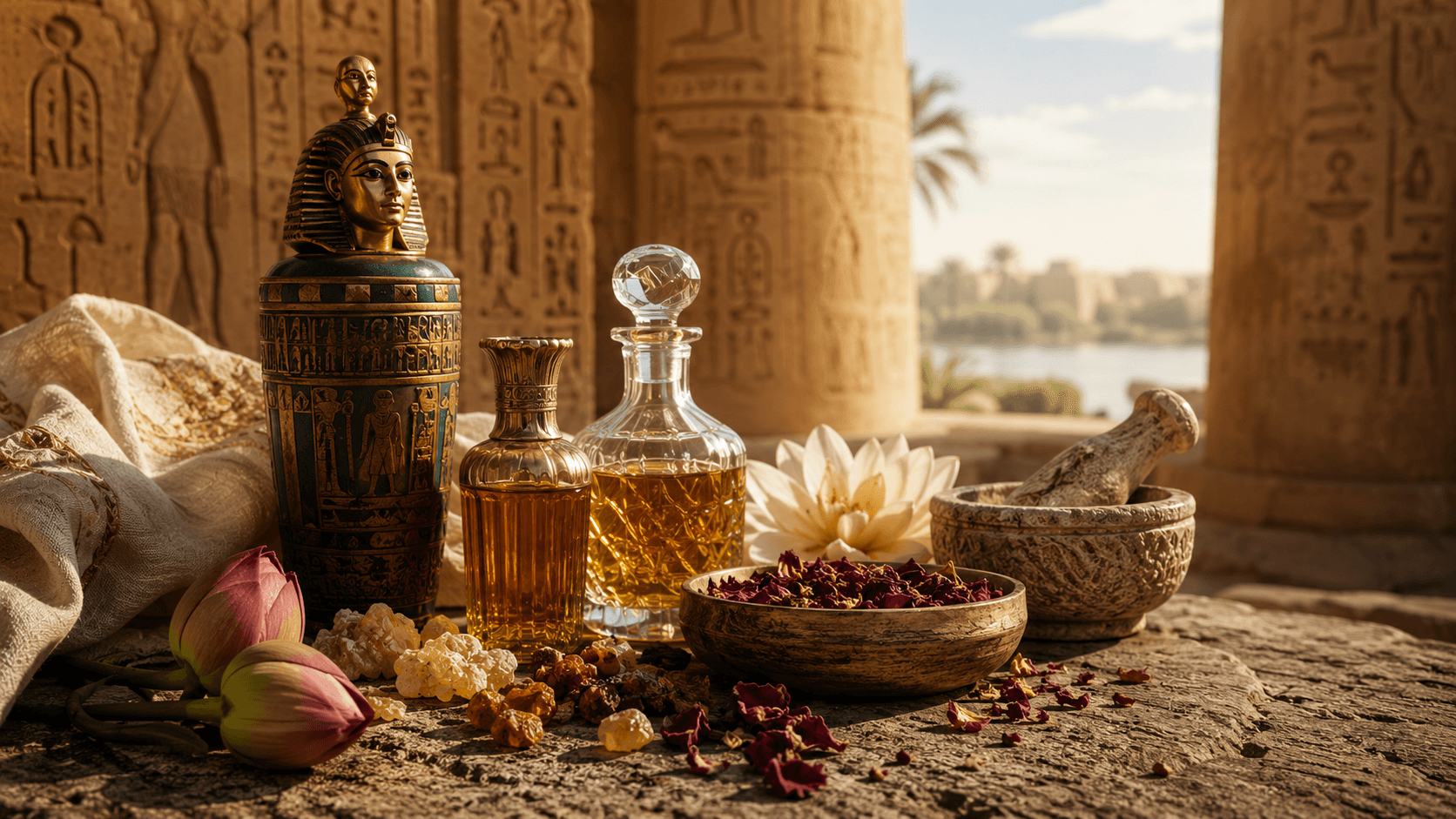
Ancient Egypt is often considered one of the birthplaces of perfumery. Scents were connected with religion, cleanliness, medicine, and the afterlife. Ingredients such as myrrh, frankincense, lotus, and aromatic oils were used in ceremonies, cosmetics, and burial rituals.
02
From Greece and Rome to the Renaissance
As fragrance knowledge spread, ancient Greece and Rome turned scent into a symbol of refinement. Perfume became part of bathing culture, social rituals, and luxury living.
In the Middle Ages, distillation techniques developed further, especially through Arab chemists and alchemists. Later, during the Renaissance, Italy and France helped transform perfume into an art form. Bottles became more beautiful, formulas more complex, and fragrance became part of fashion and personal identity.
03
The modern era of personal scent
The 19th and 20th centuries changed perfume forever. Synthetic fragrance molecules made new scent profiles possible. Large fragrance houses emerged. Perfume became more accessible, more expressive, and more connected to lifestyle.
But the core experience stayed almost the same: one bottle, one scent, one fixed identity.
04
The next chapter: smart fragrance
Today, ININUM represents a new step in this long history. Instead of choosing one static fragrance, users can create, adjust, and switch blends through a smart device and mobile app.
Fragrance is no longer limited to one bottle. It can become dynamic, personal, and adaptable, changing with your mood, moment, outfit, or occasion.
The history of perfume has always been about evolution. ININUM is simply the next chapter.